HealthDARES
The Speakers
Lecturers include policymakers, distinguished scholars from ETH, and guests from internationally renowned leading institutions and organizations.

ETH Zurich
Alessandro
Blasimme
Alessandro Blasimme is a Senior Scientist at the Health Ethics and Policy lab of ETH Zurich. He holds a degree in philosophy and a master in bioethics from La Sapienza University of Rome (Italy), as well as a PhD in bioethics from the University of Milan – European School of Molecular Medicine (Italy). He has held research appointments at the French National Institute of Health and Medical Research (INSERM) as well as the University of Zurich (Switzerland), before joining Swiss Federal Institute of Technology (ETH Zurich) in 2017. In 2013 he received a Fulbright-Schuman Scholarship to undertake research at Harvard University (USA). His activities revolve around ethical and regulatory issues in biomedicine and biotechnology. His work covers areas such as genomics, stem cell research, cell therapy, gene therapy, precision medicine, digital health, the use of artificial intelligence in medicine, and ageing.

Federal Office of Public Health
Katrin
Crameri
Katrin Crameri, Division Head of the Digital Transformation Division at the Federal Office of Public Health (FOPH), is a senior leader at the intersection of digital transformation, health policy and system innovation. She plays a central role in advancing Switzerland’s national digital-health strategy, including the coordination of DigiSanté and the development of modern, citizen-centric data infrastructures. Her work focuses on creating enabling frameworks, fostering collaboration across sectors, and ensuring that digital solutions strengthen quality, efficiency and trust in the healthcare system.

ETH AI Center
Menna
El-Assady
Mennatallah El-Assady is an Assistant Professor at the Department of Computer Science, ETH Zürich. She heads the Interactive Visualization and Intelligence Augmentation (IVIA) lab. Prior to that, she was a research fellow at the ETH AI Center; and before that, she was a research associate in the group for Data Analysis and Visualization at the University of Konstanz (Germany) and in the Visualization for Information Analysis lab at the OntarioTech University (Canada). She works at the intersection of data analysis, visualization, computational linguistics, and explainable artificial intelligence. Her main research interest is studying interactive human-AI collaboration interfaces for effective problem-solving and decision-making. In particular, she is interested in empowering humans by teaming them up with AI agents in co-adaptive processes. She has gained experience working in close collaboration with political science and linguistic scholars over several years, which led to the development of the LingVis.io platform. El-Assady has co-founded and co-organized several workshop series, notably Vis4DH and VISxAI.

IBM Research
Agata
Ferretti
Agata Ferretti, PhD is an ethicist and AI governance expert currently serving as the European Lead of the AI Alliance at IBM. The AI Alliance is a non-profit, grassroots community of 195+ companies, startups, researchers, and nonprofits, united in their mission to advance open, safe, and responsible AI. Agata holds a PhD from ETH Zurich, where her research centered on the ethical and governance challenges of big data and AI in digital health and biomedical research. For instance, she led work on Digital Health Promotion (DHP) for young people in LMICs, examining the associated ethical and policy challenges and contributing to the development of a comprehensive policy dashboard.

ETH Zurich
Katharina
Frey
Katharina Frey serves as Executive Director of the International Computation and AI Network (ICAIN), which is based at ETH Zurich. ICAIN is a joint initiative of ETH, EPFL, Data Science Africa and ELLIS (a paneuropean network of excellence of machine learning institutes from top European Universities), as well as two supercomputing centers: CSCS and CSC Finland. Ms. Frey brings a strong track record in digital diplomacy, AI governance, and global partnerships. She was a career diplomat with the Swiss Federal Department of Foreign Affairs for 17 years and was posted in Paris, Bern, and Vienna (UN) as deputy Ambassador. In her last posting at HQ, she helped establish the Digital Foreign Policy Division and shaped Switzerland’s strategy on digital and AI governance and cybersecurity. She has led projects to strengthen cyber resilience for "International Geneva" and has pioneered AI research initiatives with international partners. Katharina holds two master's degrees: one in law from the University of Zurich and one in public administration from the London School of Economics.

EPFL
Jean-Pierre Hubaux
Jean-Pierre Hubaux is Professor and the academic director of the EPFL Center for Digital Trust (C4DT). For its whole duration, he led the Data Protection in Personalized Health (DPPH) project funded by the ETH Council. Until December 2021, he was a co-chair of the Data Security Work Stream of the Global Alliance for Genomics and Health (GA4GH). He is a Fellow of both IEEE and ACM. Recent awards: three of his papers obtained distinctions at the IEEE Symposium on Security and Privacy, the flagship event on the topic (in 2015, 2018 and 2021). He is among the most cited researchers in privacy protection and in information security. He is a co-founder of Tune Insight SA.

TU Munich
Marcello
Ienca
Marcello Ienca is a tenure-track Assistant Professor of Ethics of AI and Neuroscience at the TUM School of Medicine. He is also Deputy Director of the TUM Institute for History and Ethics of Medicine. Professor Ienca has a second affiliation at the EPFL (Switzerland), where he leads the SNSF-funded project "HybridMinds" and the Ethics Group for Intelligent Systems at the College of Humanities (CDH). Prof. Ienca conducts research on the ethically sustainable development of AI systems and neurotechnologies. He uses theoretical and empirical methods to investigate the ethical, social and political implications of these technologies focusing on topics such as the brain-machine interface, the relationship between AI and human cognition, and the ethical processing of Big Data. He is known for his pioneering work on neurorights. He is the Neuroethics Lead of the International Brain Initiative and an expert advisor to the UN. Ienca studied philosophy and cognitive science at the University of Rome, Humboldt-Universität zu Berlin, New York University and KU Leuven. In 2018, he completed his PhD in biomedical ethics at the University of Basel with summa cum laude honors. He then worked as a postdoc and senior researcher at ETH Zurich. In 2021, he was a visiting scholar at the University of Oxford and founded the Intelligent Systems Ethics Group at EPFL.

D-mærket/D-seal
Mikael
Jensen
Since 1 February 2020, Mikael Jensen has been the Director of the D-mærket/D-seal, which is Denmark's labelling program for IT security and responsible use of data. The Danish Industry Foundation is behind the D-seal in cooperation with Danish Industry (DI), the Danish Chamber of Commerce, SMEdenmark and the Danish Consumer Council. The D-seal is supported by the Danish Business Authority and the Agency for Digital Government and is an independent private organisation. Mikael holds a MSc from Aarhus University and has many years of experience from digital start-ups and before that from strategic and operational roles in the TDC Group (incumbent telco). Mikael started his career in the industrial group Unilever. Mikael is a member of the Danish Data Ethics Council, member-nominated Expert of The Global Partnership on Artificial Intelligence (GPAI) and a member of ‘Nordic Ethical AI Expert Group’.

ETH Zurich
Catherine Jutzeler
Catherine Jutzeler is an Assistant Professor in the Department of Health Sciences and Technology at ETH Zurich. Her research focuses on biomedical data science to identify underlying causes, risk factors, and biomarkers of disease progression, as well as potential treatment strategies, across diverse medical areas such as infectious diseases, oncology, neurology, and musculoskeletal disorders. She leverages multimodal data and integrates heterogeneous sources using advanced statistical and machine-learning approaches to develop predictive models that enhance understanding of complex disease mechanisms and support precision medicine. Moreover, Catherine leads multiple national and international working groups, including the SPHN/PHRT-funded National Data Stream IICU, which aims to enable personalized, data-driven prediction and assessment of infection-related outcomes in Swiss ICUs.

ETH Zurich
Sara
Kijewski
Sara Kijewski is a Postdoctoral Researcher at the Health Ethics & Policy Lab, ETH Zurich, and the Director of Operations of the ETH AI Ethics and Policy Network. She holds a PhD in political science from the University of Bern. Currently, she is member of the eCH expert group “AI-Standards in healthcare”, which develops standards for the development and use of AI for healthcare in Switzerland. She has contributed to the development of a governance roadmap for digital health in Switzerland, and been involved in the research project "Precise4Q: Predictive Modelling in Stroke”. Her research focuses on the ethics and governance of artificial intelligence and digital health.
WHO
Rohit
Malpani
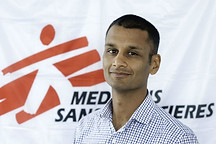
Rohit Malpani is independent consultant on AMR, AI for health, access to medicines. Before that, Malpani was Director of Policy and Analysis at Médecins Sans Frontières’ (MSF) Access Campaign and the Special Adviser, Policy and Campaigns Unit for Oxfam Hong Kong. Previously, he served as Senior Campaigns Adviser at Oxfam America, where he managed Oxfam’s “access to medicines” campaign, provided advice to Oxfam on the intersection of intellectual property and development, and also served as a corporate campaigns adviser with Oxfam America’s Private Sector Department. Previously, he worked as a human rights adviser to the World Health Organization and the International Labor Organization, and also with local civil society groups in Thailand and Argentina. Malpani started his legal career as an intellectual property attorney with the law firm of Wilson, Sonsini, Goodrich and Rosati. He holds a DJur from New York University School of Law and a Bachelor of Arts from Rice University.
University of Copenhagen
Timo
Minssen
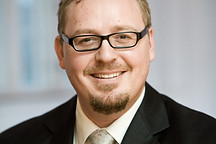
Timo Minssen is Professor of Health & Life Science Innovation Law at the University of Copenhagen (UCPH) and the Founding Director of UCPH's Center for Advanced Studies in Bioscience Innovation Law (CeBIL). He is also an Inter-CeBIL/PFC affiliate at Harvard Law School and an LML Research Affiliate at the University of Cambridge. His research, supervision, teaching & part-time advisory practice concentrates on Intellectual Property-, Competition & Regulatory Law with a special focus on new technologies, big data & artificial intelligence in the health & life sciences. This involves a plethora of legal issues emerging during the innovation lifecycle - from the sustainable regulation of R&D and incentives for innovation to responsible technology transfer and commercialization. Due to his academic and practical experience from law firms, courts & life science start-ups, Timo serves as a member of several international committees and as an advisor to the WHO, WIPO, EU, companies, national governments, and law firms. He frequently presents on his research around the globe. His publications are featured in international media and comprise 8 books, as well as 230+ articles, reports, and book chapters.
CHUV
Jean Louis Raisaro
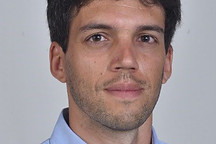
Jean-Louis Raisaro is the head of the Clinical Data Science Group at the CHUV Biomedical Data Science Center. His work and research focus on the development of technologies to enable safe and privacy-preserving artificial intelligence and machine learning (AI/ML) in the context of organizational, and health information architectures. His work on privacy-preserving federated analytics and semantic data interoperability has been implemented by the Swiss Personalized Health Network and has been published by top-ranked biomedical informatics journals such as the Journal of Medical Internet Research, the Journal of American Medical Informatics Association, and multidisciplinary scientific journals such as Nature Communications and Nature Computational Science.

ETH Zurich
Gunnar
Rätsch
Gunnar Rätsch is a professor of bioinformatics at ETH Zurich. His group develops and applies advanced data analysis and modeling techniques to data from deep molecular profiling, medical and health records, as well as images. He is leading multiple international working groups, including the RNA analysis group of the International Cancer Genome Consortium. He is an active contributor to the Global Alliance of Genomics and Health (GA4GH), an international organization that promotes and technically supports data sharing across institutional and country boundaries. He leads the data group of the BRCA Challenge project, a driver project of GA4GH.

WHO/
Europe consultant
Elettra
Ronchi
Elettra Ronchi, PhD, MPP, is currently senior policy consultant and lecturer in data governance, privacy and digital health. In her former capacity as Head of Unit in the Division for Digital Economy Policy at the Organization for Economic Cooperation and Development, she has led work on data governance, privacy and risk management for over a decade. Work under her guidance has included the review of the implementation of the OECD Privacy Guidelines, the development and OECD Council adoption of the 2021 OECD Recommendation on Enhancing Access and Sharing of Data, the 2021 Recommendation on Children in the Digital Environment and the 2016 Recommendation on Health Data Governance. During her career as international policy analyst, Dr. Ronchi has worked extensively on evaluating the conditions for system innovation and digital transformation which she has examined in a variety of sectors with a particular focus on health care systems. She has served as an expert on various advisory boards and panels, including most recently the Ethics Advisory Council of the International Covid-19 Data Alliance, the Working Group on Data Governance of the Global Partnership on Artificial Intelligence, and the Foundation Board of the Graduate Institute of International and Development Studies. Elettra Ronchi started her policy career in 1993 as consultant for the United Nations Development Programme, before which she held academic research and teaching positions in the U.S. and France.

HMS Center for Bioethics
Barry
Solaiman
Dr Barry Solaiman is an Affiliate of the Harvard Medical School Center for Bioethics and an Adjunct at Weill Cornell Medicine – Qatar. He previously served for nine years as Associate Dean for Academic Affairs and Associate Professor of Law at Hamad Bin Khalifa University College of Law. He holds a PhD in Law from the University of Cambridge and specialises in healthcare law and the regulation of artificial intelligence in medicine. He is co-editor of the Research Handbook on Health, AI and the Law, a member of the World Health Organization Working Group on Regulatory Considerations for AI in Health, a Governor of the World Association for Medical Law, and a recipient of the Science and Sustainability Award from the British Council.

OECD
Eric
Sutherland
Eric Sutherland is a Senior Health Economist leading the OECD’s work in Digital Health, bringing together policy guidance for digital tools, integrated data, and responsible analytics including artificial intelligence. In that role, he is accountable for measuring and evolving the OECD’s Recommendation on Health Data Governance (2017) and supporting digital health policy that provides data protection (e.g. security and privacy) and timely access to quality data to optimize the use of data for information, insights, and impact among individuals, health workers, policy makers, researchers, and innovators. Before joining the OECD, Eric led the Secretariat for a pan-Canadian Health Data Strategy, bringing together experts and governmental leaders from across Canada to establish an integrated health data ecosystem that better uses data for health systems, public health, population health, research, and care. Eric authored the Pan-Canadian Health Data and Information Governance Framework and Toolkit and has taught courses in data science, health data governance, and privacy.

Roche Diagnostics
Afua Van Haasteren
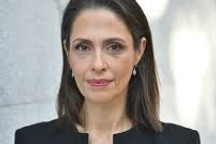
Afua van Haasteren is the Director of Health Policy & External Affairs at Roche Diagnostics, specializing in Data & Digital Policy within the Global Access & Policy team. With nearly a decade of cross-sector experience spanning philanthropy, academia, and industry, her work is focused on shaping the data and digital policy landscape. At Roche, she is instrumental in influencing government policies to promote patient access to the company's data and digital product portfolio. She is a key contributor to various industry association working groups, including MedTech Europe and Digital Europe, where she helps deliberate on future data & digital legislations, as well as market access strategies. Afua holds a PhD in Health Ethics and Policy from ETH Zurich where she researched Trust in Digital Health.
ETH Zurich
Effy
Vayena
Effy Vayena is Professor of Bioethics at the Swiss Federal Institute of Technology Zürich (ETH Zürich). In her work, she investigates how advances in science and technology can be ethically applied for best outcomes in public and personal health. Vayena founded the Health Ethics and Policy Lab. The Lab’s purpose is to tackle ethical questions that arise at the cutting edge of biotech research, in areas such as genomic technologies and big data analytics for healthcare. Vayena has been appointed Faculty Associate at the Berkman Klein Center for Internet & Society at Harvard University, where she was previously a Fellow. She has published over a hundred peer-reviewed articles and book chapters and co-edited several books. Vayena is also an elected member of the Swiss Academy of Medical Sciences. She chairs the Ethical, Legal and Societal Implications advisory group for the Swiss Personalized Health Network, a national infrastructure and research program which aims to advance personalized healthcare in Switzerland. She is a member of the World Economic Forum’s advisory board for the Global Risks Report. In 2021 she was named chair of the Greek National Bioethics and Technoethics Commission. Professor Vayena frequently advises governments and public policy organizations on matters of digitization and ethics. Since 1 January 2024, she is the Associate Vice President for Digital Transformation and Governance, elected by the Executive Board of ETH.

Sidley Austin LLP
Eva von Mühlenen
Eva von Mühlenen, a law graduate (University of Heidelberg, Germany & University of Bern, Switzerland), advises on complex legal and regulatory matters across the life sciences spectrum, drawing on her broad experience and in-depth knowledge of Swiss regulations, as well as the administrative procedures involved in manufacturing, authorizing, marketing and advertising of medicinal products and medical devices. In addition, she advises on matters concerning digital health, including the application of artificial intelligence and machine learning software in healthcare and digital and data strategies, including data protection, privacy, and cybersecurity issues. Eva co-leads Sidley’s benchmarking group for in-house MedTech lawyers (mtlegal) and practice covers the pharmaceutical, medical device, MedTech and biotechnology industries on both advisory and contentious matters. She is a thought leader on digital health issues, currently serving as an advisor to the Swiss National Science Foundation’s National Research Programme 77 on “Digital Transformation”, which is charged, in cooperation with the Federal Institute of Technology Zurich (ETHZ), with developing a policy roadmap for digital health innovation. She has also recently authored a paper on “Trustworthy Digitalization - A Digital Transformation Strategy.” Eva has recently been recognized by Legal 500 EMEA (Switzerland) for healthcare and life sciences where clients describe her as “the first point of contact when it comes to Food, Drug and Medical Device Compliance.

Novartis
Lukas
Widmer
Lukas Widmer is an Associate Director Statistical Consultant in the Advanced Methdology & Data Science group at Novartis. He holds a Doctor of Science degree from the Department of Biosystems, Science and Engineering at ETH Zürich, with a background in Computer Science and Computational Biology. Lukas joined Novartis seven years ago and focuses on developing as well as rigorously implementing innovative methods to best make use of a variety of data to accelerate clinical drug development projects. He also collaborates on production-grade open-source software for implementing these methods and creates trainings for statisticians and data scientists. His research interests include Bayesian statistics, especially in the context of clinical trials, data re-use and automation through analysis results data modeling and generative AI, high-performance computing, and statistical software engineering.